

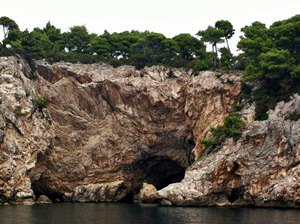
 The Elaphiti Islands are situated close to Dubrovnik and they were inhabited in ancient times. Scientists suppose that Greek colonists were first to inhabit this strategically advantageous area with a favourable climate, though Illyrians had inhabited many of the islands before. The archipelago and almost all of the Adriatic islands were under the reign of Latins during the heyday of the Roman Empire. The archipelago and almost all of the islands passed to medieval Slavic principalities in middle ages. The Elaphiti archipelago was influenced by different cultures for a long time, so nowadays there are ruins of various buildings. There are mostly villas and mansions of aristocrats, which have preferred to live in this peaceful and picturesque place over the years.
The Elaphiti Islands are a great place for those children, who are not dependent on computers, gadgets, and other «civilized» entertainments. They will be a perfect holiday destination for …  Open
Open
 Open
Open
Croatian cuisine will hardly confuse you with its appearance and ingredients. The dishes are usually made of fresh ingredients, which won’t have a harmful effect on your organism. … Open
Open
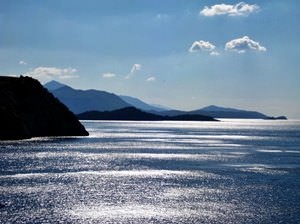 Daksa Island firstly appeared in historical chronicles only in the 13th century. Franciscan monastery of Saint Sabine was built there at that time. Unfortunately, the monastery hasn’t lasted till the present time. Its stones were used to build a fortress during the French occupation. The fortress still exists. At the end of the 19th century, a Polish prince Alexander Poninski built a huge library here. The collection of the library includes more than 400 hundreds of books and 200 manuscripts. Here is also a resting place of dozens of Dubrovnik citizens, who were executed after the liberation of the city in 1944.
City tours, excursions and tickets in Elaphiti Islands and surroundings
Iconic cultural sights of Croatia
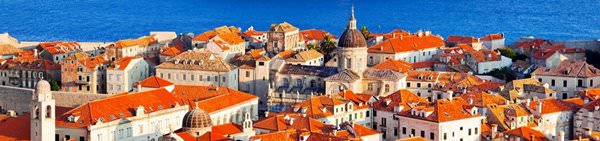 A lot of discoveries await at the Istrian peninsula, which is one of the most popular resorts. A huge number of monuments of architecture is located in the largest city of the peninsula, Pula. The city was founded by ancient Romans. An amphitheater that was built 2 thousand years ago, has perfectly survived there. It still hosts major events and concerts. In Porec, it is worth to visit the Euphrasian basilica, built in the 6th century, and the ancient Roman temple of Neptune. Otherwise, tourists may just stroll through the streets of the downtown. The old part of Rovinj that is rich in monuments of Romanesque style, is worth a look too. The city museum is set in a beautiful building in the Baroque style. An amazing exhibition is represented at the premises of the Franciscan Monastery. One of the most recognizable cities in Croatia is Dubrovnik, which is known for the old part of the city located on the steep shore of the Adriatic Sea. The central part for walks is Stradun Street, which is lined with limestone. There are numerous shops and sights on it. It is worth to visit the Princely Palace, built in the 15th century. The mansion is designed in a mixed Gothic and Renaissance style; the building has very impressive bas-reliefs. Another monumental structure of the old part of Dubrovnik is the Franciscan monastery of the 14th century, which has a rich courtyard. Next to it, there is the Great Fountain of Onofrio, which was a part of the water supply in the old city. Dubrovnik has numerous amazing museums. One of them is Rupe Ethnographic Museum, located in the building of a huge granary.
… Open
A lot of discoveries await at the Istrian peninsula, which is one of the most popular resorts. A huge number of monuments of architecture is located in the largest city of the peninsula, Pula. The city was founded by ancient Romans. An amphitheater that was built 2 thousand years ago, has perfectly survived there. It still hosts major events and concerts. In Porec, it is worth to visit the Euphrasian basilica, built in the 6th century, and the ancient Roman temple of Neptune. Otherwise, tourists may just stroll through the streets of the downtown. The old part of Rovinj that is rich in monuments of Romanesque style, is worth a look too. The city museum is set in a beautiful building in the Baroque style. An amazing exhibition is represented at the premises of the Franciscan Monastery. One of the most recognizable cities in Croatia is Dubrovnik, which is known for the old part of the city located on the steep shore of the Adriatic Sea. The central part for walks is Stradun Street, which is lined with limestone. There are numerous shops and sights on it. It is worth to visit the Princely Palace, built in the 15th century. The mansion is designed in a mixed Gothic and Renaissance style; the building has very impressive bas-reliefs. Another monumental structure of the old part of Dubrovnik is the Franciscan monastery of the 14th century, which has a rich courtyard. Next to it, there is the Great Fountain of Onofrio, which was a part of the water supply in the old city. Dubrovnik has numerous amazing museums. One of them is Rupe Ethnographic Museum, located in the building of a huge granary.
… Open