

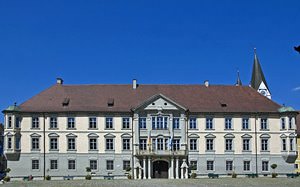
 Cultural traditions of Bavaria are interesting, original and diverse. They represent a wonderful combination of old and modern lifestyle; travelers will feel the unique atmosphere of past centuries in every Bavarian town. Local people treat their traditions and culture with great trepidation, carefully preserving them from the influence of both neighboring countries and surrounding towns. All those living outside of Bavaria are called Prussians; this definition can be applied to both inhabitants of distant lands and to citizens of the nearby Cologne and Hamburg.
1. It’s most convenient to travel around Bavaria by train; thrifty travelers are advised to buy Bayern-Ticket at the train station. It operates 24 hours and gives the right to travel …  Open
Open
 Open
Open
Bavaria has been the popular holiday destination for many years. The beauty of alpine landscapes, unique towns with various attractions, a rich history, infrastructure and hospitality of … Open
Open
 Another striking manifestation of the national culture is the national costume being a special pride of the indigenous population. Due to the huge number of ethnic groups living in the territory of Bavaria, there are several different variations of national costumes. The most recognizable attributes are leather pants or shorts and felt jackets decorated with trusses of chamois hair. Talking about cultural traditions of Bavaria, it’s certainly worth to mention the Beer Festival, as it remains one of the favorite holidays of the indigenous population.
National traditions of Germany
 At the same time, festivities and folk festivals are very popular in Germany. The Germans are quite religious and always celebrate Christian holidays, including Easter, Christmas, and St. Nikolaus day. Christmas is celebrated here on a grand scale. Preparations begin long before its onset. Beer festivals are famous all over the world; the most famous of them is the Munich Oktoberfest. The Germans are very tolerant to foreigners, especially those who come to work in their country. They are also very friendly to tourists. Locals will always appreciate attempts to say hello or ask something in German, taking it as a sign of respect for their language and culture.
… Open
At the same time, festivities and folk festivals are very popular in Germany. The Germans are quite religious and always celebrate Christian holidays, including Easter, Christmas, and St. Nikolaus day. Christmas is celebrated here on a grand scale. Preparations begin long before its onset. Beer festivals are famous all over the world; the most famous of them is the Munich Oktoberfest. The Germans are very tolerant to foreigners, especially those who come to work in their country. They are also very friendly to tourists. Locals will always appreciate attempts to say hello or ask something in German, taking it as a sign of respect for their language and culture.
… Open